What Is a Pole Barn? A Complete Beginner's Guide
If you’ve been researching building options for a garage, workshop, farm building, or even a home, you’ve probably come across the term “pole barn.” But what exactly is a pole barn, and why are they so popular?
This guide breaks it all down — what pole barns are, how they’re built, what they’re used for, and whether one might be right for your project.
What Is a Pole Barn?
A pole barn (also called a post-frame building) is a type of structure that uses large wooden posts or laminated columns buried in the ground — or anchored to a concrete foundation — as its primary structural support. Instead of a traditional foundation and load-bearing walls, the poles carry the weight of the roof and transfer it directly into the ground.
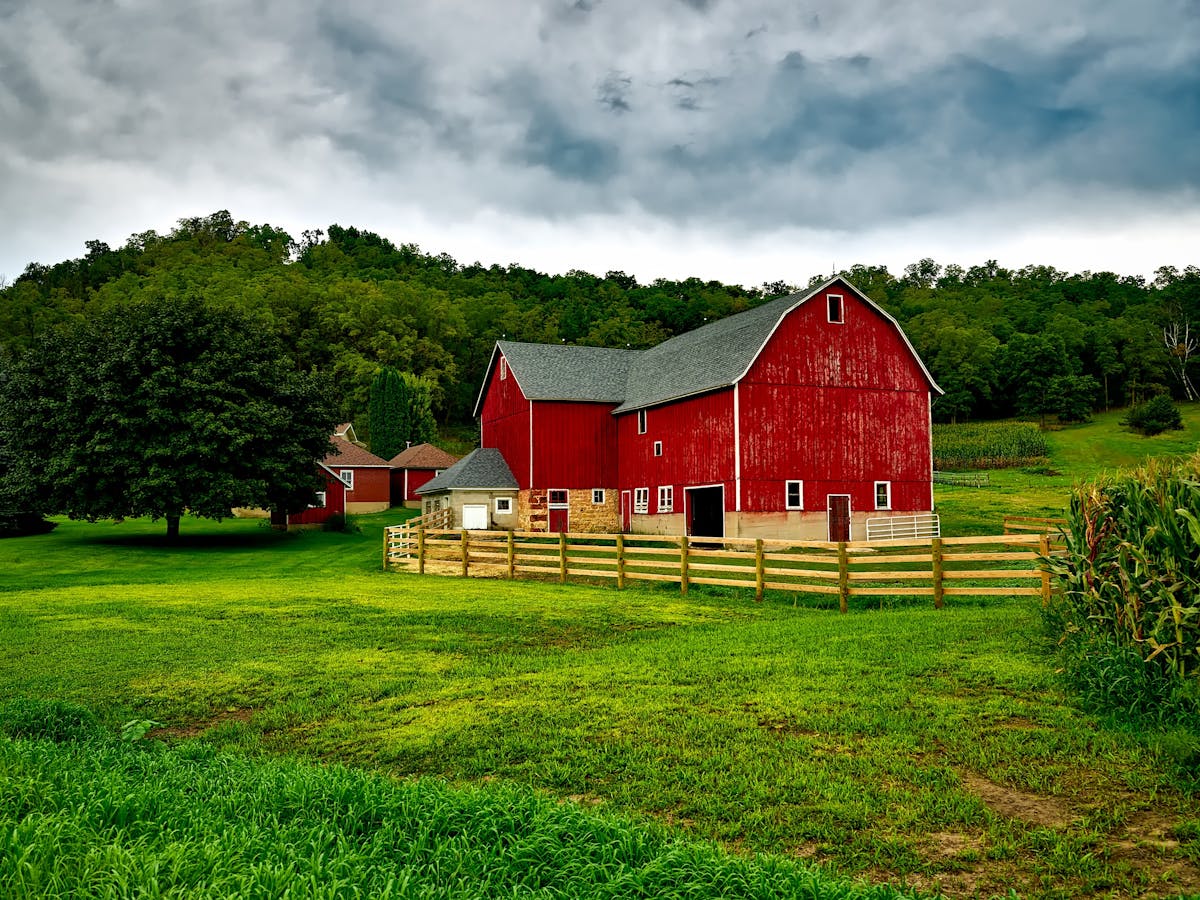
The walls of a pole barn are attached to the posts but don’t bear any structural load. This means the building can have wide, open interior spaces without needing interior walls or columns for support — one of the biggest advantages of pole barn construction.
Modern pole barns typically feature:
- Wooden posts (6x6 or laminated columns) set 8–12 feet apart
- Engineered roof trusses spanning the full width (no interior support needed for widths up to 60+ feet)
- Metal siding and roofing (steel panels in a variety of colors)
- Concrete slab or compacted gravel floor (depending on use)
- Large overhead doors for vehicle or equipment access
How Is a Pole Barn Different from a Regular Building?
The key difference is the foundation and framing method.
| Feature | Pole Barn (Post-Frame) | Traditional (Stick-Built) |
|---|---|---|
| Foundation | Posts in ground or on piers — no continuous footer | Poured concrete foundation with footer |
| Framing | Posts + trusses (wide spans) | 2x4/2x6 stud walls (load-bearing) |
| Exterior | Metal panels (steel siding/roofing) | Wood siding, brick, vinyl, etc. |
| Interior | Wide open — no load-bearing walls needed | Interior walls often structural |
| Build time | 1–3 weeks | 2–6 months |
| Cost | $15–$45/sq ft | $100–$200/sq ft |
Because pole barns skip the expensive continuous foundation and use fewer materials overall, they cost 40–60% less than traditional stick-built construction. That’s why they’ve become the go-to choice for anyone who needs a large building on a budget.
For a detailed cost comparison, see our guide on pole barn vs stick-built construction.
How Are Pole Barns Built?
Pole barn construction follows a straightforward process:
1. Site Preparation
The build site is graded and leveled. If the building will have a concrete slab, gravel base and vapor barrier are laid down first.
2. Setting the Posts
Holes are dug (typically 4–6 feet deep) and the wooden posts are set in place, either embedded in concrete or mounted on concrete piers. The posts are the backbone of the entire structure — they support the roof and resist wind loads.
3. Framing the Roof
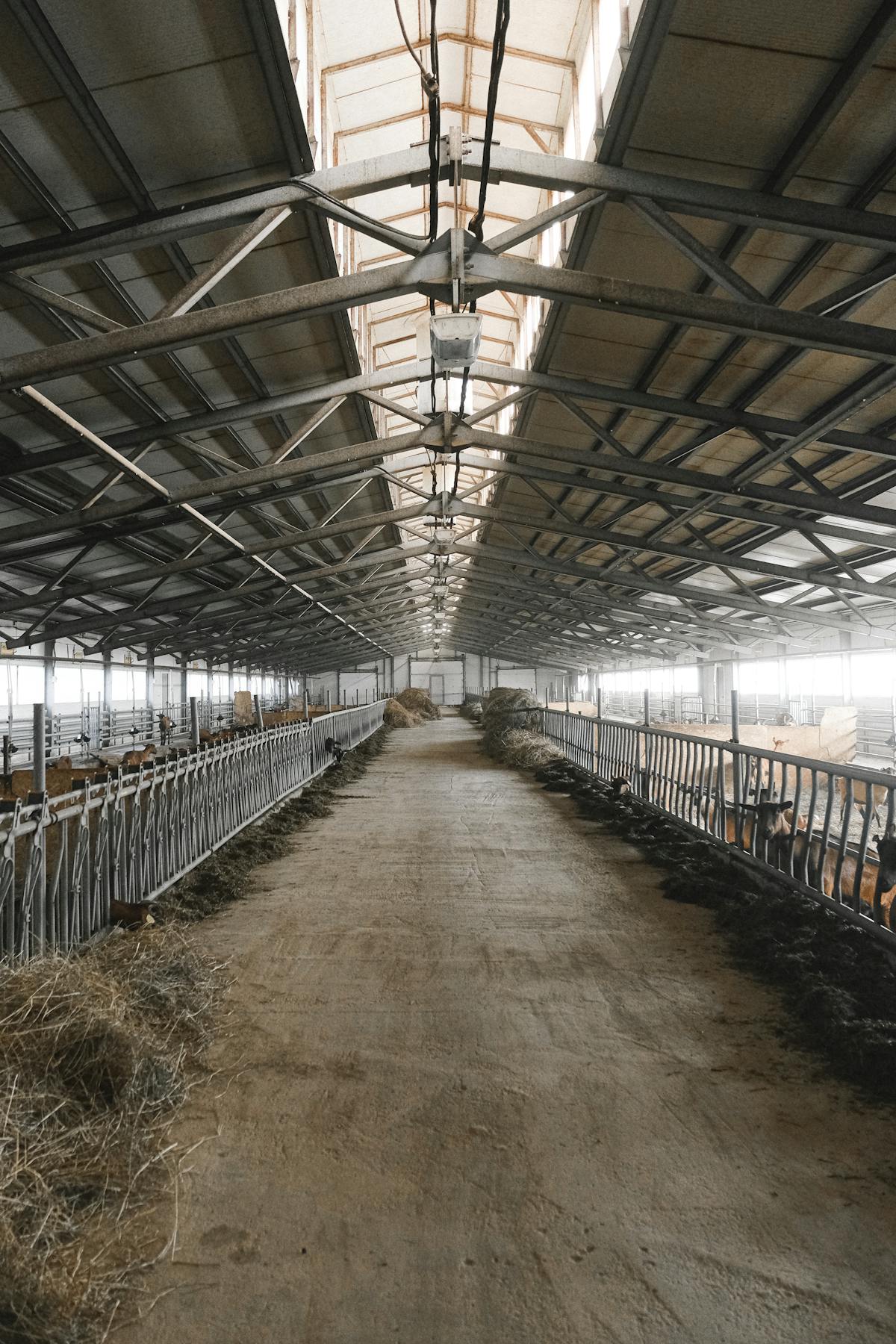
Pre-engineered wooden trusses are lifted into place on top of the posts. These trusses span the full width of the building, which is why pole barns can have completely open interiors — there’s no need for interior support columns in buildings up to 60 feet wide.
4. Attaching Siding and Roofing
Metal panels (usually 26-gauge or 29-gauge steel) are screwed onto horizontal girts (purlins) attached to the posts. The roof panels go on the same way. Metal siding comes in dozens of colors and can give a pole barn a clean, modern look.
5. Adding Doors, Windows, and Finishing
Overhead doors, walk doors, and windows are installed. Depending on the intended use, you might also add insulation, electrical wiring, plumbing, and interior finishing.
What Are Pole Barns Used For?
Pole barns are incredibly versatile. Here are the most common uses:
Agricultural Storage
The original — and still most common — use for pole barns. Farmers use them for equipment storage, hay storage, grain bins, and livestock shelter. The wide-open interior makes it easy to drive tractors and large equipment in and out.
Garages and Workshops
A pole barn makes an excellent detached garage or workshop at a fraction of the cost of a traditional garage. Popular sizes include 30x40 (2–3 car garage) and 40x60 (workshop with room for a lift). See our pole barn garage cost guide for detailed pricing.
Horse Barns
Pole barns are the standard construction method for horse barns. The open floor plan allows for center-aisle layouts with stalls on both sides, tack rooms, wash bays, and hay storage.

Barndominiums (Pole Barn Homes)
One of the fastest-growing trends in residential construction is the barndominium — a pole barn shell with finished living quarters inside. Barndominiums cost $40–$85 per square foot fully finished, compared to $150–$250+ for traditional home construction. They’re especially popular in rural areas of Texas, Indiana, Michigan, and Ohio. Learn more in our barndominium cost guide.
Commercial and Retail
Small businesses use pole barns for retail shops, auto repair garages, storage facilities, and light manufacturing. The low construction cost and fast build time make them attractive for small business owners.
Hobby and Recreation
Man caves, she-sheds, home gyms, indoor basketball courts, RV storage — pole barns give hobbyists a huge amount of space for relatively little money.
What Are the Advantages of a Pole Barn?
Cost. Pole barns cost $15–$45 per square foot for a basic shell, compared to $100–$200+ for traditional construction. Even a fully finished barndominium is significantly cheaper than a conventional home.
Speed. A pole barn shell can go up in 1–3 weeks. A stick-built structure of the same size takes 2–6 months.
Open floor plan. No load-bearing interior walls means you can use the space however you want — and reconfigure it later without structural concerns.
Clear span widths. Pole barns can span 40, 60, or even 80+ feet without interior columns, giving you a massive unobstructed interior.
Durability. Metal siding and roofing last 40+ years with minimal maintenance. Treated posts resist rot and insects. Many pole barns outlast the farmers who built them.
Customization. Metal siding comes in dozens of colors. You can add wainscoting (stone or brick on the lower portion), cupolas, porches, and other architectural details to make a pole barn look like anything from a rustic farmstead to a modern commercial building.
What Are the Disadvantages?
Zoning restrictions. Some residential neighborhoods and HOAs don’t allow pole barns. Always check local zoning before you plan a build. See our permits and zoning guide for details.
Financing. Banks sometimes hesitate to finance pole barns, especially barndominiums, because they don’t fit neatly into “home” or “commercial” loan categories. Construction loans or agricultural loans may be needed.
Resale perception. In suburban areas, a pole barn may not add as much to property value as traditional construction. In rural areas, it’s the opposite — a good pole barn is a major selling point.
Insulation challenges. Metal buildings without insulation experience condensation and extreme temperature swings. If you plan to heat or cool the space, you’ll need to budget for insulation ($2–$5/sq ft additional).
How Much Does a Pole Barn Cost?
Pole barn costs depend primarily on size, features, and whether you buy a kit or hire a contractor:
| Size | Kit Only | Contractor-Built | With Slab + Electric |
|---|---|---|---|
| 24×24 (576 sq ft) | $4,000–$8,000 | $9,000–$20,000 | $15,000–$30,000 |
| 30×40 (1,200 sq ft) | $7,000–$15,000 | $18,000–$40,000 | $25,000–$50,000 |
| 40×60 (2,400 sq ft) | $14,000–$25,000 | $36,000–$65,000 | $45,000–$80,000 |
| 60×80 (4,800 sq ft) | $25,000–$50,000 | $70,000–$130,000 | $90,000–$160,000 |
The national average for a 40×60 pole barn (the most popular size) is about $27,500 for a contractor-built shell. Check our complete cost guide or browse costs by state for local pricing.
Pole Barn Kit vs. Hiring a Contractor
A pole barn kit includes pre-engineered plans, lumber, trusses, metal panels, fasteners, and trim — shipped to your site for assembly. Kits cost 40–60% less than hiring a contractor but require serious construction skills, tools, and 2–4 weeks of labor.
Hiring a contractor includes everything — materials, labor, concrete, and typically a warranty. Most homeowners who aren’t experienced builders should go this route.
For a full comparison, see our kit vs custom-built guide.
Is a Pole Barn Right for You?
A pole barn is a great choice if you:
- Need a large building (garage, workshop, storage, barn) at the lowest possible cost
- Have rural or agricultural property where zoning allows post-frame construction
- Want an open floor plan without interior columns
- Need the building quickly (weeks, not months)
- Are considering a barndominium as an affordable housing alternative
A pole barn may not be the best fit if you:
- Live in a subdivision with HOA restrictions that prohibit pole barns
- Need a building that looks like traditional residential construction from the outside (though modern pole barns can look remarkably conventional)
- Need multiple stories (pole barns are typically single-story, though loft space is possible)
Ready to Get Started?
If you’re considering a pole barn, the next steps are:
- Check local zoning — confirm pole barns are allowed on your property
- Determine your size and features — use our cost calculator to estimate pricing
- Get quotes — request free quotes from licensed pole barn builders in your area
- Compare kit vs. contractor — decide whether to DIY or hire a pro
Browse our state-by-state cost guides for local pricing, or jump straight to getting free quotes from builders in your area.
Frequently Asked Questions
What is a pole barn in simple terms? A pole barn is a building that uses large wooden posts (poles) set in the ground as its structural support instead of a traditional concrete foundation and load-bearing walls. The posts support the roof trusses directly, allowing for wide-open interiors. Pole barns are typically clad in metal siding and roofing and are one of the most affordable building methods available.
How long does a pole barn last? A well-built pole barn with treated posts and quality metal siding can last 40–60+ years with minimal maintenance. The metal roofing and siding typically carry 40-year warranties. The most common point of failure is the posts — using pressure-treated lumber rated for ground contact is essential for longevity.
Can you live in a pole barn? Yes. A pole barn with finished living quarters is called a barndominium. Barndominiums must meet local residential building codes for insulation, electrical, plumbing, HVAC, and fire safety. They cost $40–$85 per square foot fully finished — significantly less than traditional home construction.
Are pole barns cheaper than metal buildings? Generally yes for smaller buildings (under 5,000 sq ft). Pole barns use wood posts and trusses with metal cladding, while pre-engineered metal buildings use an all-steel frame. Pole barns are cheaper and easier to build at smaller scales, while metal buildings may be more cost-effective for very large commercial structures. See our pole barn vs metal building comparison.
Do pole barns need a foundation? Pole barns don’t need a traditional poured foundation with continuous footers. The posts are either embedded directly in the ground (in concrete or compacted gravel) or mounted on concrete piers. A concrete slab floor is optional — many agricultural pole barns use compacted gravel floors instead. The lack of a continuous foundation is one of the main reasons pole barns are so much cheaper than conventional buildings.
Do I need a permit to build a pole barn? In most areas, yes. Building permit requirements vary by jurisdiction — some rural counties have minimal requirements for agricultural buildings, while suburban areas typically require full building permits, engineered plans, and inspections. Permit costs range from $50 to $2,000+. Check our permits and zoning guide for details.
What is the most popular pole barn size? The 40×60 (2,400 sq ft) is the most popular pole barn size nationally. It’s large enough for a spacious workshop, 4–6 vehicle garage, or small agricultural building, while still being affordable for most property owners. Other popular sizes include 30×40 (starter garage/workshop) and 60×80 (large farm building).
Tags
Related Resources
How Much Does a Pole Barn Cost? Complete 2026 Guide ($15–$65/sqft)
Complete guide to pole barn cost in 2026: $27,500 national average, $15,000–$75,000 typical range, $15–$65 per sqft. What's included in a quote, kit vs contractor breakdown, finish-level cost factors, and how to read a contractor's bid.
Read more →Pole Barn Kit vs Custom Built: Cost Comparison (2026)
Compare pole barn kit vs custom-built costs. Kits save 30–50% but require DIY labor. Get the full cost breakdown for 2026.
Read more →Barndominium Cost: Pole Barn House Pricing Guide (2026)
Barndominiums cost $50–$150 per sq ft finished in 2026. Get shell pricing, interior buildout costs, financing options, and real examples.
Read more →Pole Barn Permits & Zoning: What You Need to Know (2026)
Learn pole barn permit requirements, zoning restrictions, and costs by state. Avoid fines and delays with our 2026 guide.
Read more →Pole Barn Cost by State
pole barn costs vary significantly by state. Pick your state below for local pricing, permit rules, and licensed contractors.